
Daily Check-Ins That Drive Engagement
Fave is one of Southeast Asia's leading fintech startups, helping consumers save while empowering small and medium-sized enterprises to grow in the digital economy. Fave's core offerings include cashless payments, online/offline deals, and other promotional incentives. In April 2021, Fave was acquired by Pine Labs, an India-based unicorn.
In mid-September 2023, Fave introduced Fave Arcade in Malaysia and Singapore. This significant initiative took six months—from research and discovery to launch. The primary objective was to enhance the app's competitiveness by driving excitement and engagement among users and increasing monthly active users (MAUs).
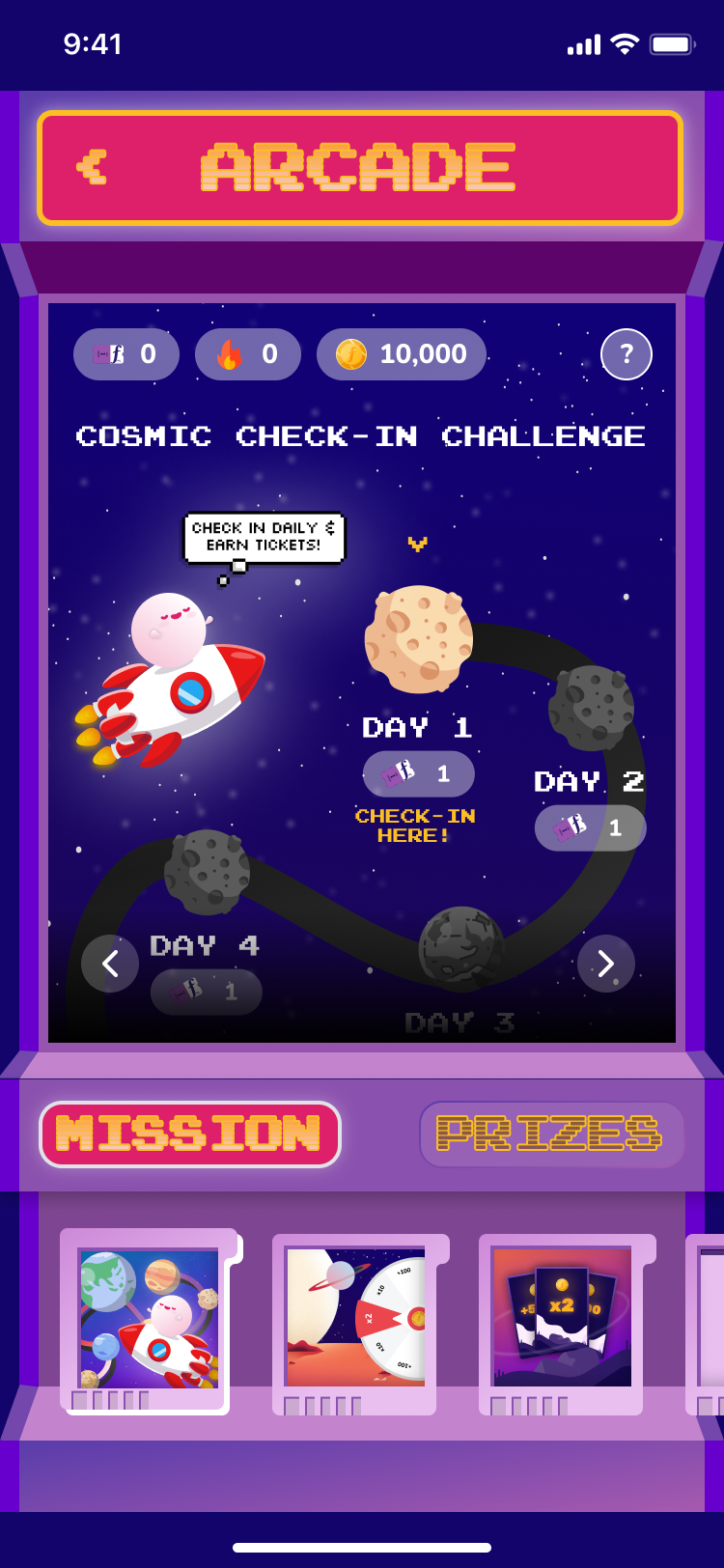
Home screen of Fave Arcade
Opportunity
Fave Arcade was launched to address stagnating MAUs that had persisted since early 2023. Since the release, we observed:

1
1.3 million Arcade tickets distributed in Malaysia and Singapore

1
This volume highlights a high level of user interaction and indicates that users are engaging with the Arcade feature as intended. The large-scale distribution reflects successful initial adoption and validates the appeal of the gamified system.
2
Increase of 20% app launches within 7 days of release
1
This rapid and substantial increase demonstrates that gamification has a direct, positive impact on user behavior. The boost in app launches indicates that the Arcade successfully addresses the core challenge—driving habitual engagement. Such early traction is critical in proving that the feature can sustain user interest over time.
Acquire new users
Engage with existing users/
reactivate old users
Convert users to customers
Increases MAU
Increases MAC


Loyalty


Acquisition
Engagement
Conversion
Retention
Customer Lifecycle model
Why Fave Arcade?
We adopted the Customer Lifecycle Model, which emphasizes more holistic, loyalty-driven cycle. Focusing first on the top and middle funnels to boost acquisition and engagement. Improving these areas would naturally drive retention and loyalty over time.
To achieve this, we identified a critical gap—users needed more reasons to open the app daily beyond transactions. This insight led to the creation of Fave Arcade.
How it works today?
As part of the MVP, users needed to make a transaction to earn tickets to play games in the Arcade. This decision was made because we needed to balance the microeconomics of potentially giving out free money when users come back to redeem a prize.
Thus, the mechanism was structured as follows:
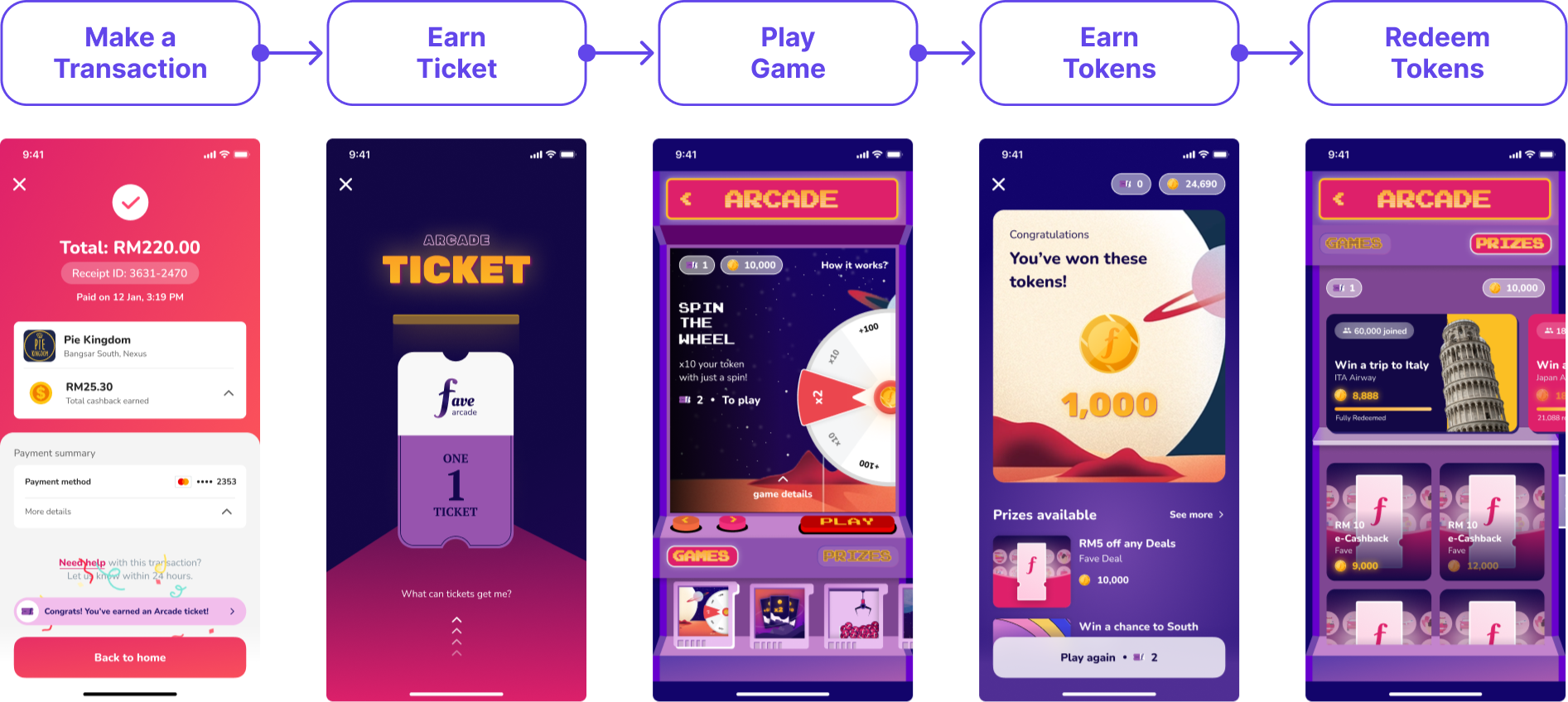
How users earn tickets to interact with Arcade in MVP version
However, limiting Arcade access to transaction-based ticket earning restricted its exposure and potential to drive organic engagement.
The visual direction of Fave Arcade was also a deliberate choice. Since Fave is predominantly an e-commerce platform, we wanted to take users away from the transactional focus within the app. This led to the conception of a space-themed design, providing a fun, immersive departure from conventional financial services.
Art & naming direction of Arcade
The Arcade name was chosen because the game center hosts various mini-games, resembling an old-school arcade. The retro theme naturally emerged from combining the arcade concept with the space aesthetic.
We chose purple as the main color because it is commonly associated with galaxies while also serving as a complementary color to Fave's primary pink palette—striking a balance between thematic coherence and brand alignment.
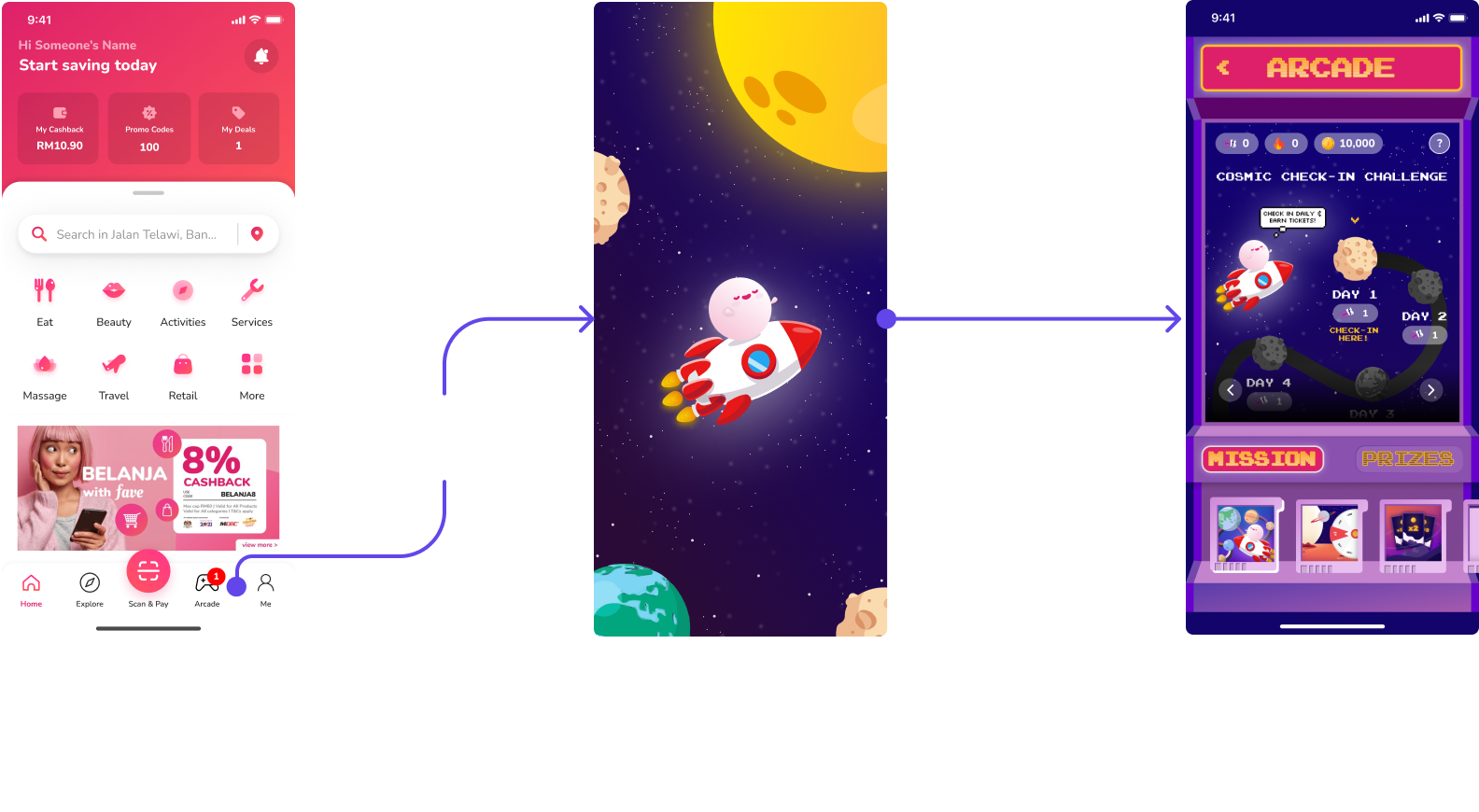
Some art elements of Aracde
Goal

Create a gamified experience that encourages users to launch Fave Arcade daily without requiring a transaction first.
Problem statement
How might we design an immersive and engaging check-in experience that encourages daily app launches while maintaining the fun, retro-space theme of Fave Arcade?
Research
User Interviews
To validate the concept of Fave Arcade and understand user motivations, we conducted comprehensive user research and market analysis. In April 2023, we conducted user interviews with a diverse group of 24 Fave users in Singapore. Our objectives were to:
Our objectives were to:
Understand whether mini-games within non-gaming apps are attractive and engaging.
Identify the motivations that drive users to engage with mini-games.
Explore if mini-games can effectively encourage daily app launches.
Determine the types of games that are most appealing within a fintech context.
Key learnings:

Users engage in mini-games for quick entertainment.
100% of users who engage with mini-games do so during commutes or waiting periods, primarily for entertainment.
Low-cognitive, simple games are preferred.
Games like daily check-ins, spin-the-wheel, or card-flips are the most effective due to their low effort and quick interaction.
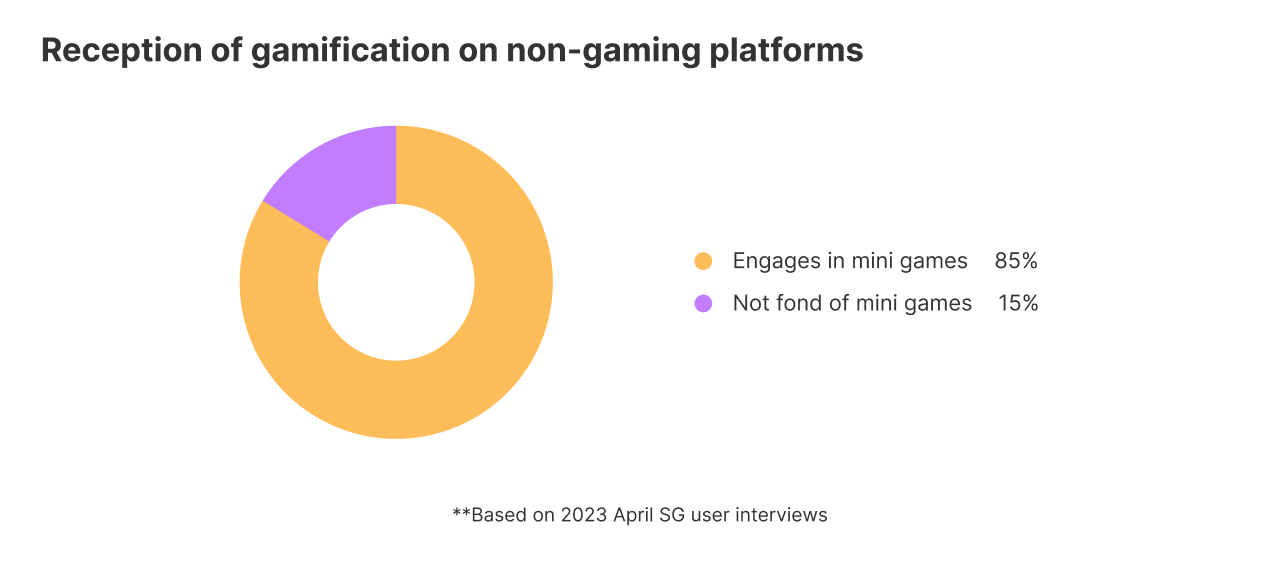
Data from Arcade Singapore user interviews
Competitor AnalysisWe analyzed local competitors with mini-game integrations, including:
1
Touch 'n Go's Alipay+ Rewards
2
Lazada
3
Shopee
These platforms leveraged daily engagement mechanics to retain users through repeat visits and incentivized actions. All these platform would give out game currencies to encourage users to come back in daily. These currencies in the end could offset a certain amount from their purchases. Only Touch ‘n Go’s Alipay+ Rewards would give out vouchers in their daily check ins to be applied with a variety of merchants.
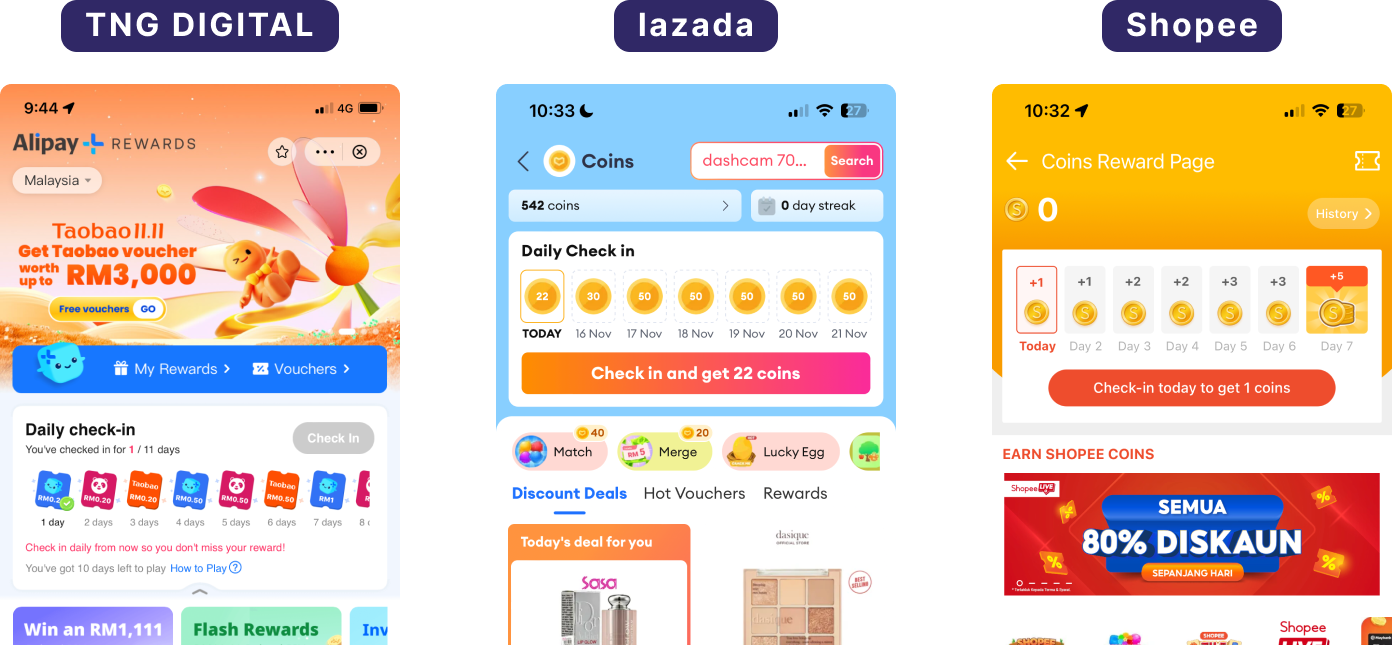
Common SEA apps that have mini-games
Internal TestingTo validate our findings, Fave Singapore ran a daily check-in challenge where users purchased a $0 gift card for 7 consecutive days to win a promo code. This resulted in a 28% spike in daily check-ins, reinforcing the effectiveness of simple engagement loops.
App launch events during daily-check in challenge


Users
Days
Results of proof-of-concept (PoC) daily check in on Fave Singapore app
Design exploration
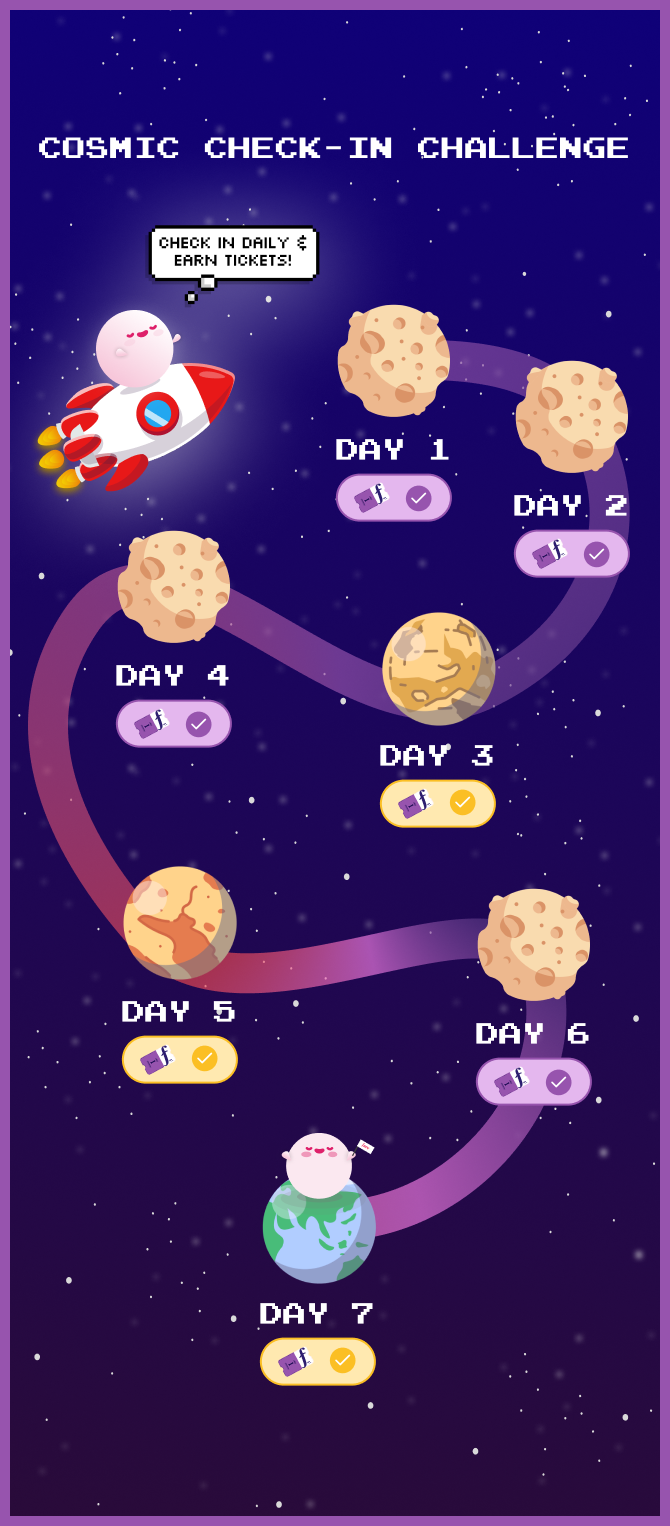
We aimed to differentiate Fave Arcade's daily check-in from standard implementations, which typically use a linear path to track progress. Our goal was to create a more immersive and thematic experience aligned with the space retro branding of Arcade.
1
Non-linear Visual Path
Initially, we considered a linear checklist for simplicity. However, we also explored to make the checklist in a diagonal fashion to create more dynamic in the design. Additionally, However, we introduced an S-shaped path to simulate a more dynamic journey while still being in theme with the retro space element. This approach increased user curiosity and made the check-in process feel more exploratory.
Although we clearly favored the last option, the developers have raised concerns it may be hard to manage what is the next element to be rendered.
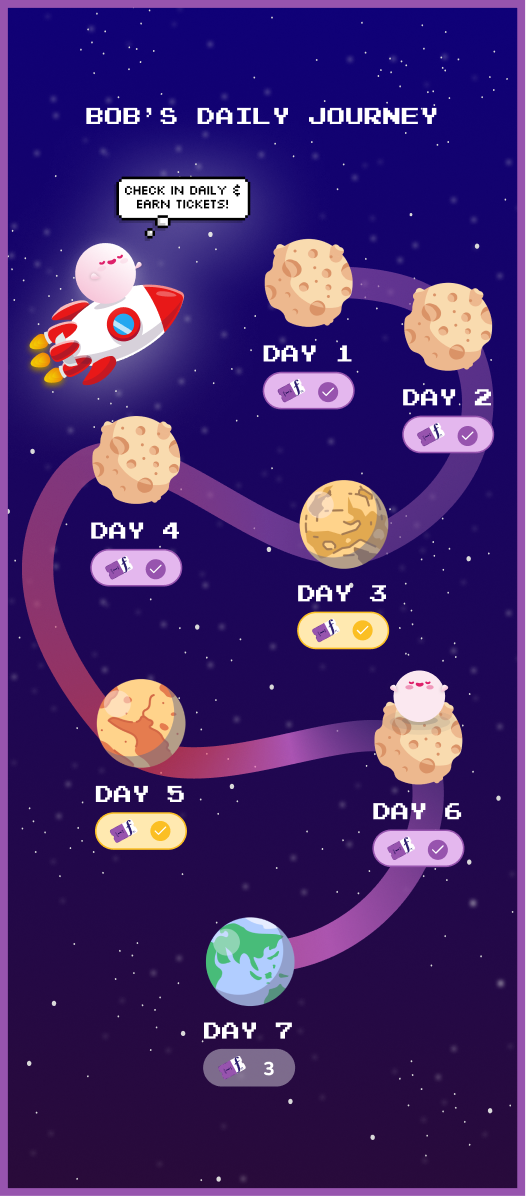
S-path
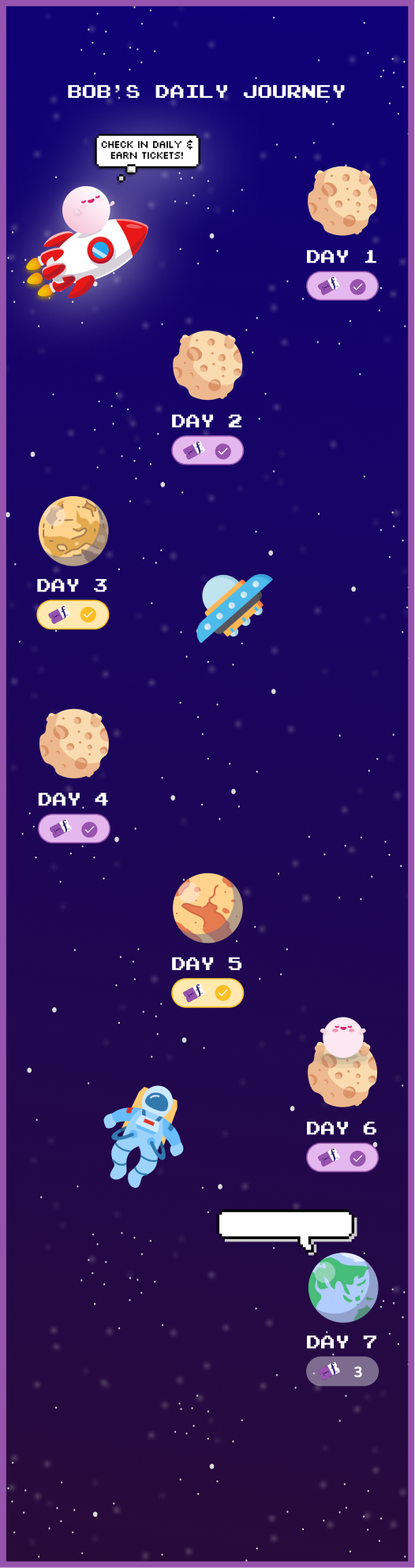
without path
Representation of check in days with and without visual path
2
Consistency and relevancy of retro space theme
We introduced Bob the mascot to break the conventional mold of daily check-ins. This animated intro set the stage for a playful, mission-based experience. We took the opportunity to also other space elements in our check in days visuals to enhance the experience of retro space theme.













Galaxy themed elements designed for check-in
3
Narrative Layer
We considered a linear check in days which is similar with our competitors but also wanted to explore to make the visuals and journey of daily check-in less conventional. Thus,we framed the check-in game as "Help Bring Bob Home", where each daily check-in moves the mascot closer to home—adding a story-driven motivation for users while differentiating the experience from traditional check-ins used by competitors.
narrative layer
clear & direct layer
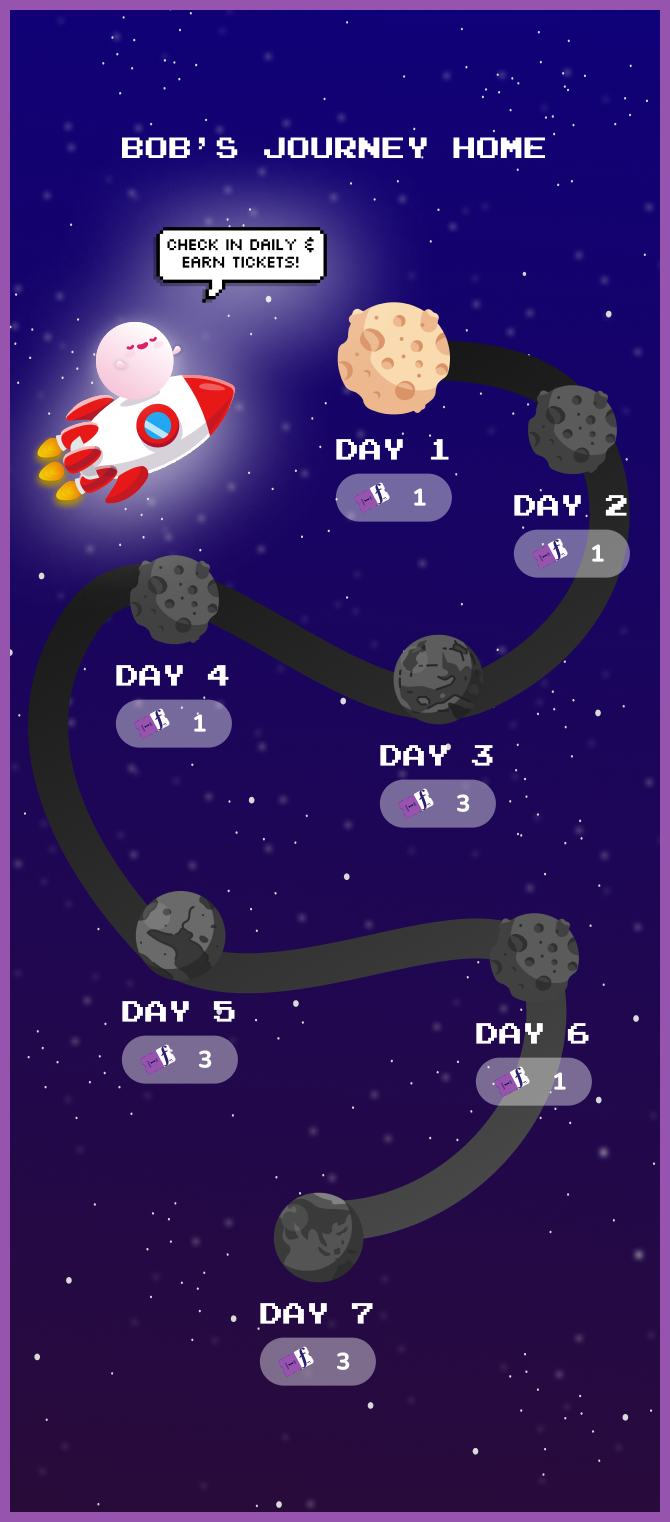
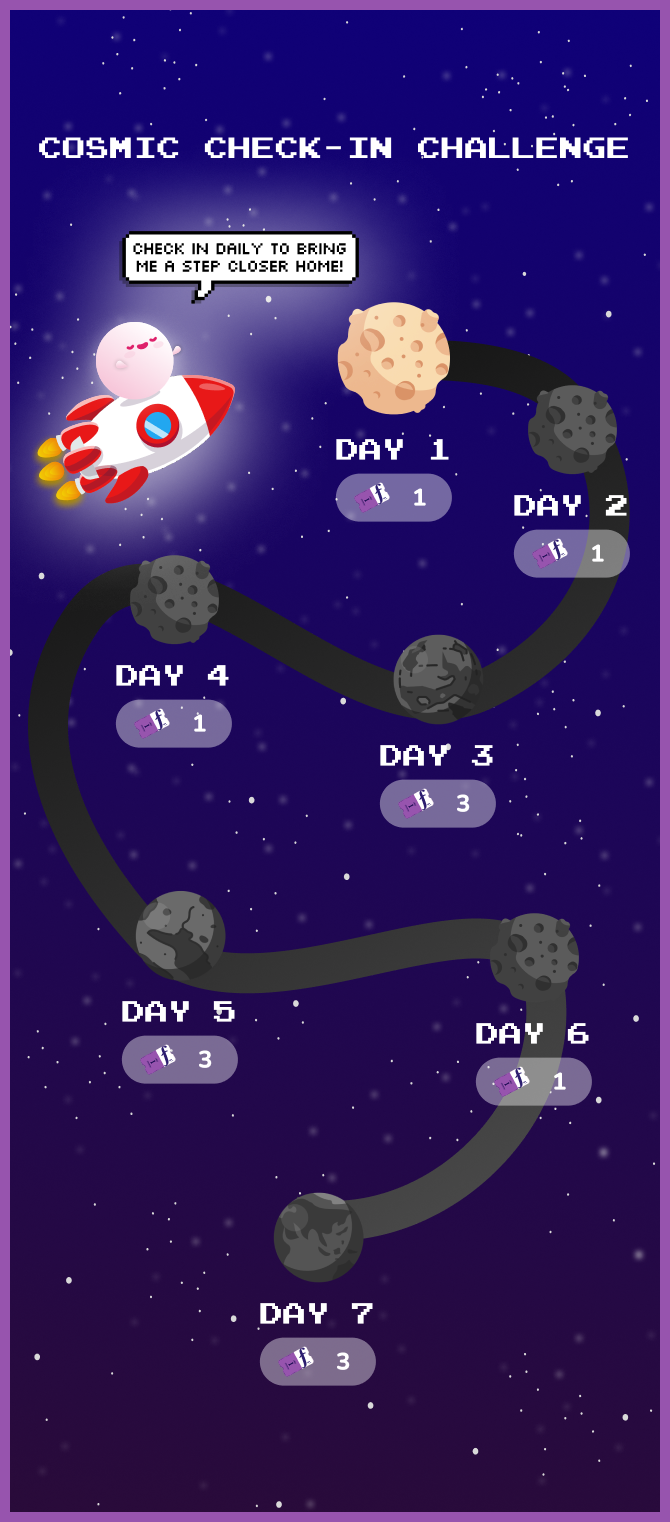
Title & narrative difference of daily check in
Internal validation
To validate our exploration, we conducted internal testing across departments and extended it to colleagues' parents to capture a broader demographic. We shared the prototype with 12 users to test:
Our objectives were to:
Ease of understanding the game design.
Likelihood of daily app launches for check-ins.
Appeal and attractiveness of the game for repeat visits.
Key learnings:
100% users found the graphics and animations engaging.
The option with S-path clearly indicated next steps and was a clear winner as it sparked curiosity while being clear at the same time.
Users returned if the ticket rewards or milestone incentives were appealing.
The narrative received mixed reactions—some users did not grasp the daily return objective.
🎉 Final Design & UI Enhancements
The final design incorporated several elements to enhance the user experience while supporting game mechanics:
1
Dynamic Ticket System for User Engagement & Marketing Flexibility
1
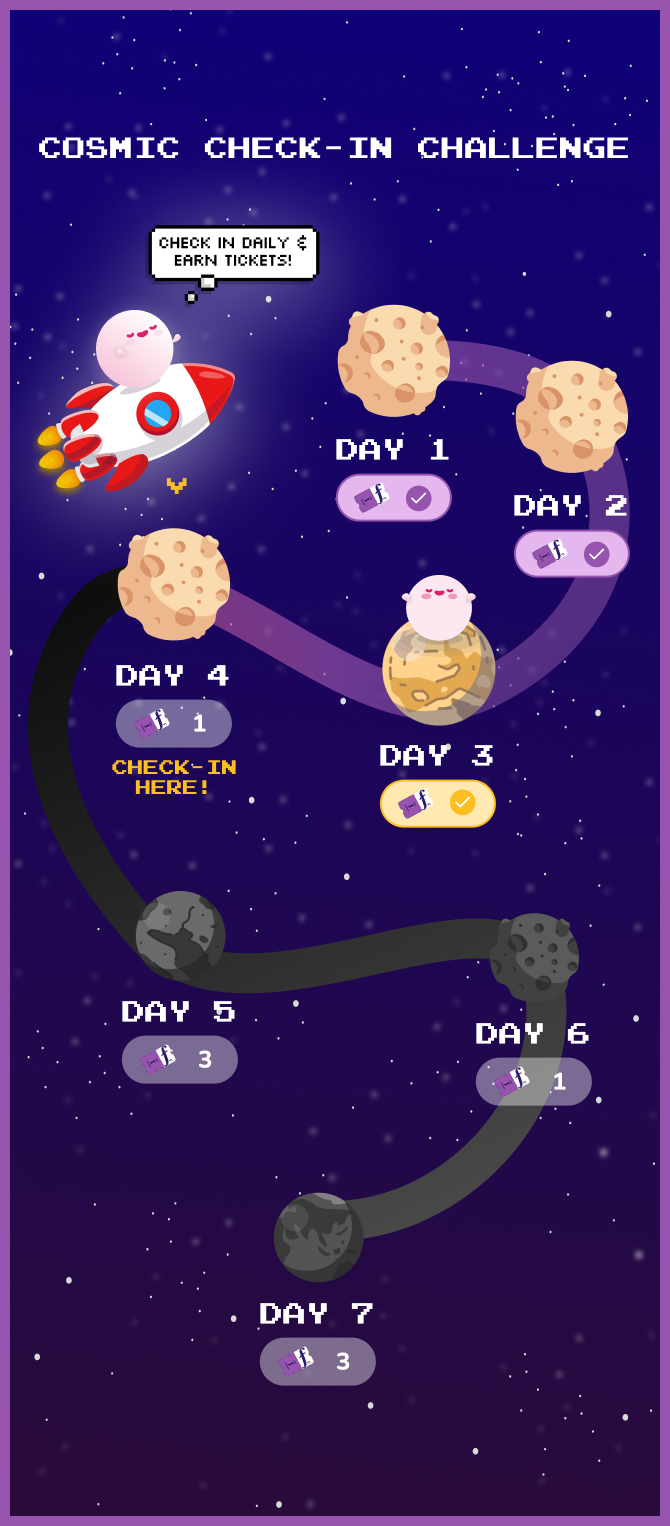
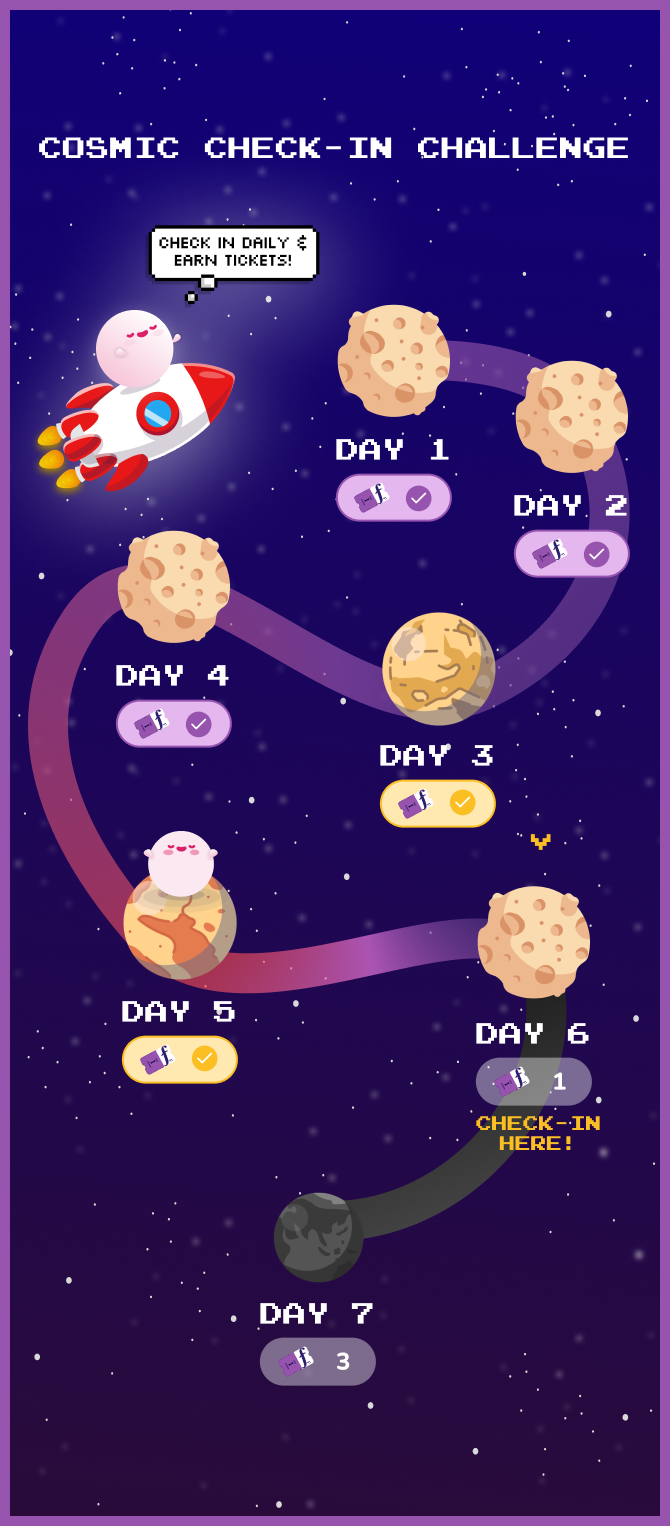
The check-in system differentiates regular and milestone days, offering bonus tickets on special days to drive repeat visits. Through the backoffice, marketing teams can customize ticket distribution for campaigns and seasonal events—enhancing user engagement while providing business agility. Purple represents standard tickets, while yellow highlights milestone days, making special rewards clear and enticing.

DAY 1

1


DAY 1
1
DAY 1
1

DAY 1
1
DAY 1
1
DAY 1
1
DAY 1

1

DAY 1
1
DAY 1
1
DAY 1
1
Using visual differences between normal and milestone days to differentiate key days for users to pay attention to
2
7-Day Check-in Cycle
1
To manage the S-path complexity, check-ins were capped at 7-day intervals—allowing the path to repeat seamlessly for longer campaigns.
S-path #1Upright position

S-path #2Inverted position


Positioning of the S-path to create 7-day check-in cycles
3
Animation Elements
1
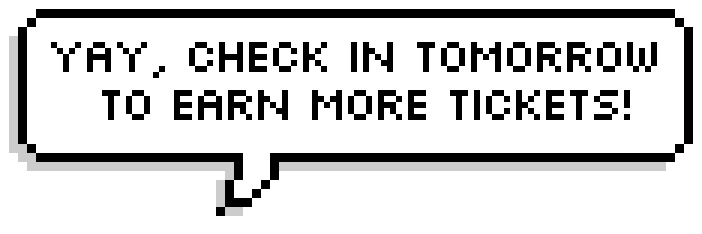
To guide users, we added pulsing and arrow blinkers on the active check-in days, providing clear and intuitive navigation.
For ticket collection, we designed a roulette-style animation to simulate a rewarding mechanism. This cohesive animation tied into the arcade spirit while reinforcing the joy of winning tickets.
>
Check-in
here!
DAY 1
1



DAY 1
1
Screenshots of merchant specific kiosk


Screenshots of merchant specific kiosk
Key learnings & takeaways
Fave Arcade demonstrated that simple, reward-based interactions—like daily check-ins—effectively boost app engagement, as shown by a 25% increase in app launches within the first seven days. Thematic storytelling (e.g., "Help Bring Bob Home") made the experience more immersive, but testing highlighted the need to balance playfulness with clarity, as unclear CTAs reduced ease of use.
The dynamic ticketing system provided marketing flexibility, enabling tailored campaigns to drive repeat visits. Cross-departmental testing with diverse age groups was crucial in ensuring the design resonated with Fave’s broad user base. Overall, gamification, paired with flexible rewards and user-centered storytelling, proved effective in sustaining engagement and supporting business growth.
- End, thank you for reading! -